



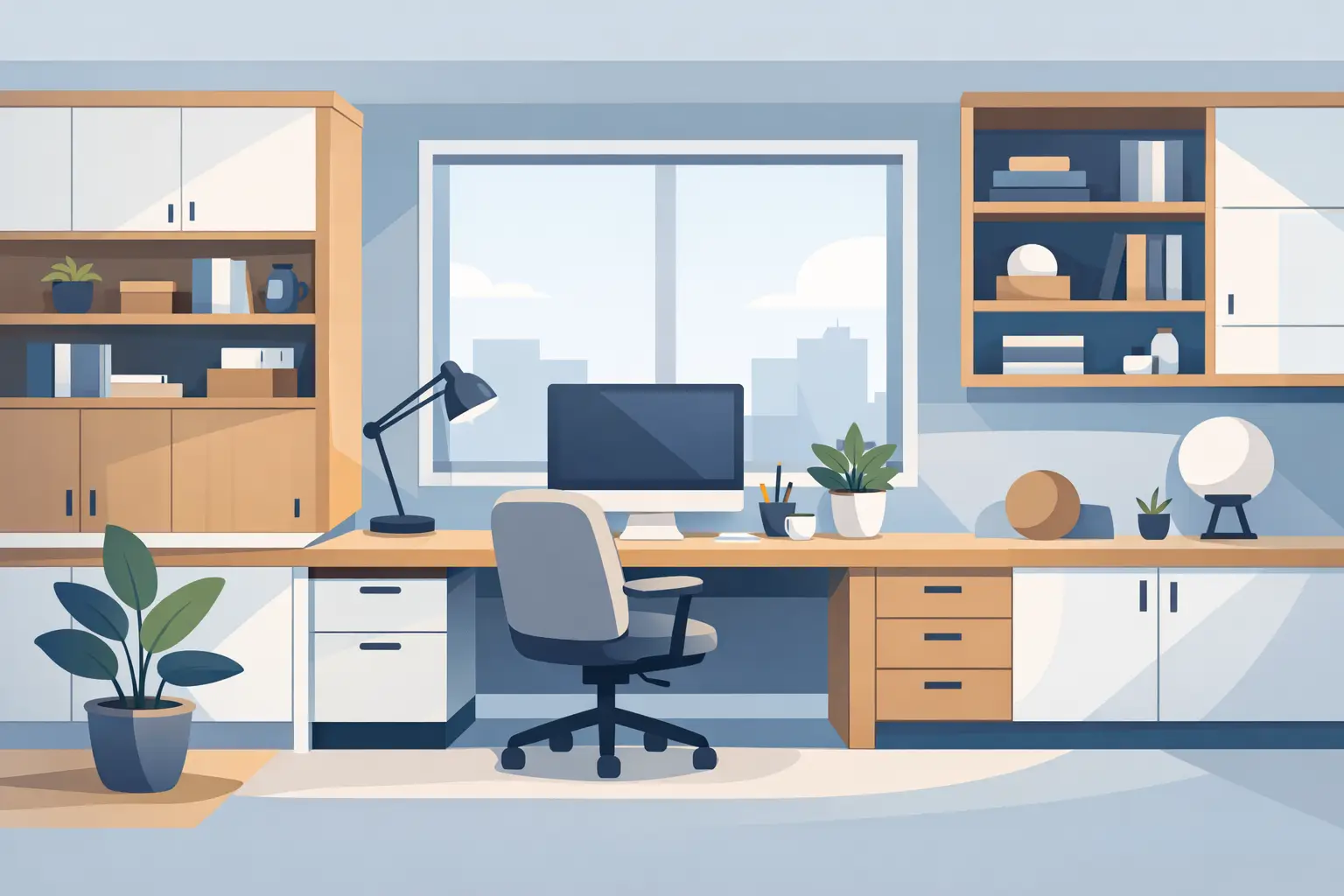
A spare bedroom becomes a work zone fast. Then the printer lands on a side table, files pile up on the floor, cords spread behind the desk, and the room starts fighting the way you work. Custom home office cabinetry fixes that by turning an improvised setup into a purposeful workspace with the right storage, proportions, and built-in function from the start.
For homeowners, professionals, and anyone managing hybrid work, the difference is not just visual. Good cabinetry changes how the room performs. It gives everything a place, supports better posture and reach, and helps the office feel consistent with the rest of the home rather than like an afterthought.
Why custom home office cabinetry outperforms off-the-shelf furniture
Flat-pack shelving and standard desks can work for light use, but they rarely solve the full brief. Most home offices have constraints – awkward wall lengths, windows in the wrong spot, alcoves, low bulkheads, limited floor area, or a need to share the room with guest storage. Standard pieces leave gaps, waste wall height, and force compromises around equipment.
Custom home office cabinetry is designed around the room and around the person using it. That matters when you need space for dual monitors, concealed charging, filing, display shelving, a sit-stand desk integration, or a printer cabinet with ventilation. Instead of adapting your workflow to furniture sizes chosen by a manufacturer, the joinery is built to suit the way you actually work.
There is also a durability factor. A home office is now a daily-use environment for many households. Drawers, doors, worktops, cable ports, and shelving need to handle constant use, not occasional admin on weekends. Well-made cabinetry earns its keep over time because it is built with a clear purpose, proper materials, and installation that accounts for walls, floors, and services.
What good cabinetry needs to solve
The best projects start by identifying pressure points, not finishes. Storage is usually the obvious issue, but workflow matters just as much. Where do paper files go? Do you need closed storage for a clean backdrop during video calls? Should reference materials stay within arm’s reach or be moved to overhead cabinets? Will the room also function as a study space for children or a shared workstation for two adults?
Ergonomics should be part of the discussion early. Desk height, monitor placement, knee clearance, depth of work surface, and reach to drawers all affect comfort over a full workday. Cabinetry that looks impressive but forces awkward posture is not a successful outcome. In practice, that means balancing storage volume with usable working space and avoiding oversized overhead units that make the desk feel boxed in.
Technology is another detail that separates average joinery from well-planned cabinetry. Power access, data points, charger storage, docking stations, task lighting, and cable routing need a home. If these decisions are left until the end, cords become visible, devices overheat in enclosed spaces, and modifications start to damage the finish. Planning for technology from the beginning keeps the office cleaner and easier to use.
Layout choices for custom home office cabinetry
There is no single correct layout. The right solution depends on room size, work style, and whether the office is single-purpose or shared with other household needs.
A full wall fit-out is often the strongest option in a compact room. It combines desk space, base cabinets, overhead storage, and open shelving into one organized elevation. This keeps the footprint tight while using vertical space efficiently. It also creates a cleaner architectural result because the cabinetry reads as part of the room.
An L-shaped arrangement suits users who switch between tasks and need separate zones for computer work and paperwork. It can make sense where the room has corner space to use, though circulation still needs attention. In a smaller office, an oversized L-shape can make the room feel crowded quickly.
A built-in desk with surrounding storage works well for minimalist spaces and multi-use rooms. It gives the office enough structure to function properly without dominating the space. That can be especially useful where the room also serves as a guest room, library, or family workspace.
Floor-to-ceiling cabinetry is effective when storage demand is high, but it has to be handled carefully. In the right room, it creates a polished and efficient result. In the wrong room, it can feel heavy. Material choice, door style, color, and the balance between open and closed storage all affect whether the installation feels refined or imposing.
Materials and finishes matter more than most clients expect
Cabinetry is judged first by appearance, but performance depends on what sits underneath the finish. Board selection, edge treatment, hardware, drawer runners, hinges, and benchtop material all affect longevity. Premium joinery should not only look precise on installation day. It should stay aligned, operate smoothly, and resist wear from daily use.
Matte finishes are popular because they feel clean and contemporary, but they can show handling marks depending on the product and color. Textured woodgrain finishes add warmth and can make a home office feel more residential, which is often a priority in open-plan homes. Painted finishes allow exact color matching, though they may require more care in high-contact areas.
Work surfaces need particular attention. A desktop has different demands from a display shelf. It needs to resist scratching, support equipment weight, and provide enough depth for comfortable viewing distances. In some projects, a thicker top helps create presence and durability. In others, a slimmer profile suits the room better. This is where custom work has an advantage – the details can be resolved based on actual use rather than default product dimensions.
The value of integrated storage
Storage is not just about fitting more into the room. It is about making the room easier to manage every day. Closed cabinets reduce visual noise and help maintain a professional backdrop. Deep drawers can hold files and equipment more effectively than shelves, especially when access matters. Open shelving can display books, awards, or decorative items, but too much open storage often makes the office look busy.
A balanced scheme usually works best. Frequently used items should be easy to access. Sensitive paperwork, spare tech, and irregular items should be concealed. If the office supports client calls or visible meetings, that mix becomes even more important because the room needs to function well on camera as well as in person.
Some clients need cabinetry to absorb more than office items. Household records, school materials, craft supplies, or shared charging stations often end up in the same room. That is where a tailored design earns its value. It can separate categories of use without making the room feel overfitted.
Why design and installation should stay connected
Cabinetry projects often look simple from the outside, but they involve site measure, design resolution, production planning, electrical coordination, material lead times, and installation sequencing. When those steps are split across too many suppliers, mistakes are more likely. Dimensions get interpreted differently, site conditions are missed, and responsibility becomes blurred.
A coordinated approach produces better results because the same team is thinking through function, manufacturing, and installation together. If power needs to move, wall conditions need to be corrected, or a desk return needs support without interrupting legroom, those details can be solved before the cabinetry reaches site.
That is where an experienced manufacturer and fit-out partner adds real value. Absolute Office Comforts approaches custom cabinetry with the same practical discipline used in larger workplace and refurbishment projects – aligning design intent, production, trades, and installation so the finished office works as planned.
Budget, timing, and where to spend wisely
Custom does not automatically mean excessive, but it does mean deliberate. Budget is shaped by size, materials, internal fittings, hardware quality, electrical work, and complexity of installation. A straightforward built-in desk with overhead storage is very different from a full wall of cabinetry with integrated lighting, concealed printer housing, and specialty filing systems.
The smartest investment is usually in the elements touched every day. Durable drawer hardware, a well-sized work surface, thoughtful cable management, and practical storage internals often matter more than decorative extras. If the budget is tight, simplify the finish palette before compromising the functionality.
Lead times also deserve realistic planning. Custom joinery is manufactured to order, and good results depend on careful measurement, approvals, fabrication, and installation. Rushing the process often creates rework later. A measured timeline is usually the better commercial decision, even in a residential setting.
When a home office is expected to support serious work, the cabinetry should do more than fill a wall. It should reduce friction, support concentration, and make the room easier to use every single day. That is the standard worth building to.