



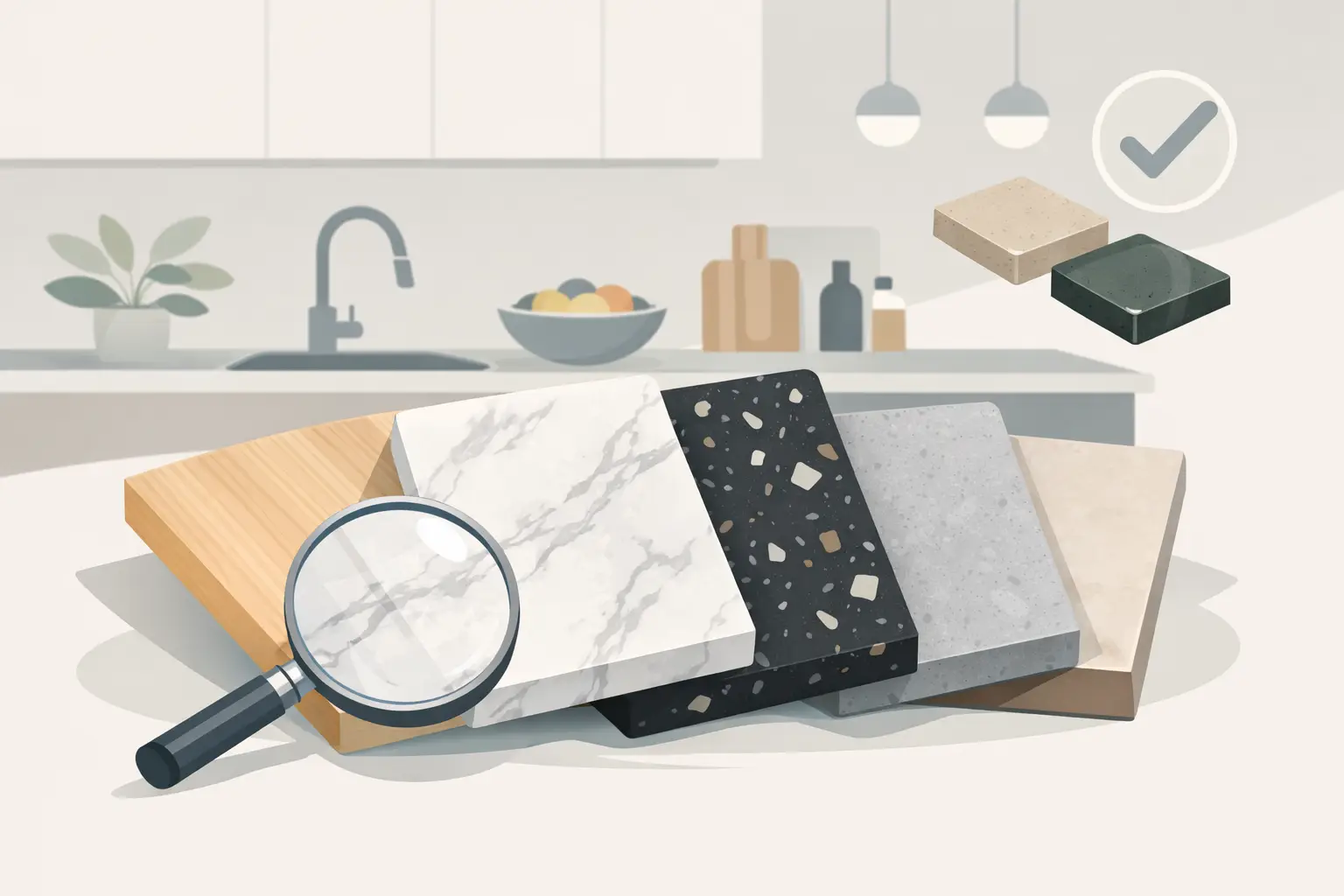
A kitchen benchtop has to do more than look good under showroom lighting. It needs to handle hot pans, wet dishes, food preparation, cleaning products, school bags, and the occasional dropped appliance without becoming the highest-maintenance part of the room. Choosing among the best kitchen benchtop materials comes down to how the kitchen will be used, the finish you want, and how much maintenance you are prepared to take on.
For a custom kitchen renovation, the benchtop should be selected alongside the cabinetry layout, sink, cooktop, splashback, and lighting. A surface that looks excellent in isolation can be impractical when paired with a heavily used island, an undermount sink, or a cooktop with limited landing space. The right decision is usually a balance of performance, budget, and design continuity.
How to Compare Kitchen Benchtop Materials
Start with the realities of daily use. A family kitchen that sees multiple meals a day needs a different surface than a low-use apartment kitchen or a statement entertaining space. Consider heat resistance, scratch resistance, stain resistance, edge durability, seam visibility, and the cleaning routine required to keep the surface looking its best.
Budget should also be assessed as part of the complete installation, not just by the square foot. Material thickness, cutouts for sinks and cooktops, waterfall ends, edge profiles, transportation, and installation all affect the finished cost. Natural stone and large-format porcelain, for example, may need more specialized handling than laminate or timber.
A professional kitchen design process helps avoid common conflicts, such as choosing a surface that does not suit an undermount sink or expecting a thin-profile material to span a large unsupported island. Samples are useful, but a full kitchen plan provides the context needed to make the material work.
The Best Kitchen Benchtop Materials to Consider
Engineered stone alternatives
Engineered stone has long been selected for its consistent appearance, broad color range, and strong everyday performance. However, health and safety requirements around respirable crystalline silica have changed how engineered stone is manufactured, supplied, and installed in many markets. When considering a manufactured stone-look product, confirm that it meets current local regulations and ask about its silica content, fabrication requirements, and installation process.
Low-silica and silica-free mineral surfaces can offer the clean, uniform appearance many homeowners want. They are generally nonporous, easy to wipe down, and available in marble-look, concrete-look, and solid-color designs. Their main limitation is heat: hot cookware should still be placed on trivets rather than directly on the surface.
This category suits homeowners who want a refined, consistent finish with low day-to-day upkeep. It works particularly well for large islands and modern cabinetry where a controlled, uniform pattern is preferred over natural variation.
Natural stone
Granite, marble, quartzite, and other natural stones bring depth and character that manufactured surfaces cannot fully replicate. Every slab varies in veining, movement, and color, which can make a kitchen feel genuinely custom. For clients designing a premium kitchen around a statement island, natural stone can become the defining material in the room.
The trade-off is that natural stone requires informed selection and maintenance. Marble is beautiful but can etch when exposed to acidic foods and drinks. Granite is generally hard-wearing but may require periodic sealing depending on the specific stone. Quartzite is often chosen for its marble-like look and high durability, although each slab should be assessed individually rather than assuming all quartzites perform the same way.
Natural stone is best for homeowners who value originality and accept that a living material may develop character over time. A honed finish can make minor marks less visually noticeable than a high-polish surface, particularly in busy kitchens.
Porcelain and sintered stone
Porcelain and sintered stone benchtops are increasingly popular in contemporary kitchen renovations. These materials are made under high heat and pressure, creating dense slabs that can offer excellent resistance to heat, staining, UV exposure, and scratching. They are available in convincing stone, concrete, metal, and solid-color finishes.
Their heat resistance makes them useful near cooktops, but that does not remove the need for sensible kitchen use. Sharp impacts on an exposed edge can cause chips, and fabrication requires experienced specialists due to the material’s hardness and brittleness. Thin profiles and mitred edges can produce a crisp architectural look, though they need careful detailing and installation.
Porcelain and sintered stone are strong choices for a modern, high-performance kitchen, especially where a benchtop may continue vertically as a splashback or wrap around an island. They also suit bright rooms because their color is less likely to fade from sunlight.
Solid surface
Solid surface materials offer a smooth, contemporary finish and one major design advantage: seams can often be made nearly invisible. This makes them particularly useful for long runs of cabinetry, integrated sinks, curved details, and clinical-looking kitchens where hygiene and clean lines matter.
The material is nonporous and can be renewed if it develops light scratches or marks. It is less resistant to heat and heavy abrasion than porcelain, granite, or quartzite, so it is better suited to careful users than to kitchens where hot pans are routinely set down without protection.
For custom cabinetry projects, solid surface gives designers flexibility that many slab materials cannot match. It is a practical option when integrated detailing matters as much as the benchtop’s surface appearance.
Laminate
Laminate remains one of the most cost-effective benchtop materials, and it has come a long way from older, glossy designs. Current options include realistic timber grain, textured stone looks, matte black, soft neutral colors, and durable compact laminate panels.
A well-designed laminate benchtop can deliver a clean, tailored kitchen without consuming the budget needed for cabinetry upgrades, better hardware, lighting, or appliances. It is easy to clean and generally performs well under ordinary use. The main vulnerabilities are excessive heat, standing water at joins, and damage to edges or cutouts if moisture reaches the substrate.
Laminate is a sensible choice for rental properties, first-home renovations, secondary kitchens, and budget-conscious projects. It can also be used strategically, such as pairing a laminate perimeter benchtop with a more premium island surface.
Timber and timber veneer
Timber brings warmth that stone-look materials rarely achieve. It works beautifully on breakfast bars, island sections, and kitchens designed to connect with living areas. A timber benchtop can soften a space with extensive white cabinetry, metal fixtures, or hard flooring.
Solid timber needs ongoing care. It can dent, scratch, and show water marks if not properly sealed and maintained. However, many homeowners see this as part of its appeal, particularly when the surface can be sanded and refinished rather than replaced. Timber veneer offers a similar visual effect with greater dimensional stability, although it cannot be refinished as extensively as solid timber.
Use timber where touch, warmth, and character are priorities. It is often most successful as an accent material rather than across every work surface in a high-use kitchen.
Stainless steel and concrete
Stainless steel is a practical, hygienic choice with commercial-kitchen credentials. It handles heat, water, and food preparation well, and it is especially effective in modern industrial kitchens or serious cooking spaces. It will scratch, but the surface develops a consistent patina over time. Fingerprints and water spots are its most common visual drawback.
Concrete offers a sculptural, custom-built appearance and can be formed into substantial islands or integrated sink details. It needs correct sealing and skilled installation to manage staining, cracking, and weight. Concrete is less about a perfectly uniform surface and more about visual texture and handcrafted character.
Both materials make a strong design statement, but they are not automatic choices for every home. They work best when the broader kitchen design supports their particular texture and personality.
Match the Material to the Way You Use the Kitchen
For most active family kitchens, porcelain, sintered stone, low-silica mineral surfaces, and selected natural stones provide a strong mix of appearance and durability. For clients who prioritize budget control, laminate offers excellent value when detailed carefully around sinks and joins. For a standout island or breakfast bar, timber or natural stone can provide the visual distinction that makes a custom kitchen memorable.
Do not choose solely from a small sample. Ask to view full slabs or larger panels where possible, especially with veined stone-look products. Check how the pattern will run across the island, waterfall panels, splashback, and seams. A dramatic slab can look refined when planned well and overly busy when its movement is not considered across the whole layout.
At Absolute Office Comforts, benchtop selection is approached as part of the complete cabinetry and installation program. That means coordinating material choice with cabinet construction, appliance clearances, sink mounting, trades, and the final finish, rather than treating it as a last-minute decorative decision.
Before making the final selection, place samples next to your cabinet door, flooring, and splashback under the actual lighting planned for the room. The material that performs well, suits the layout, and still looks right in that setting is the one that will serve your kitchen best for years.