



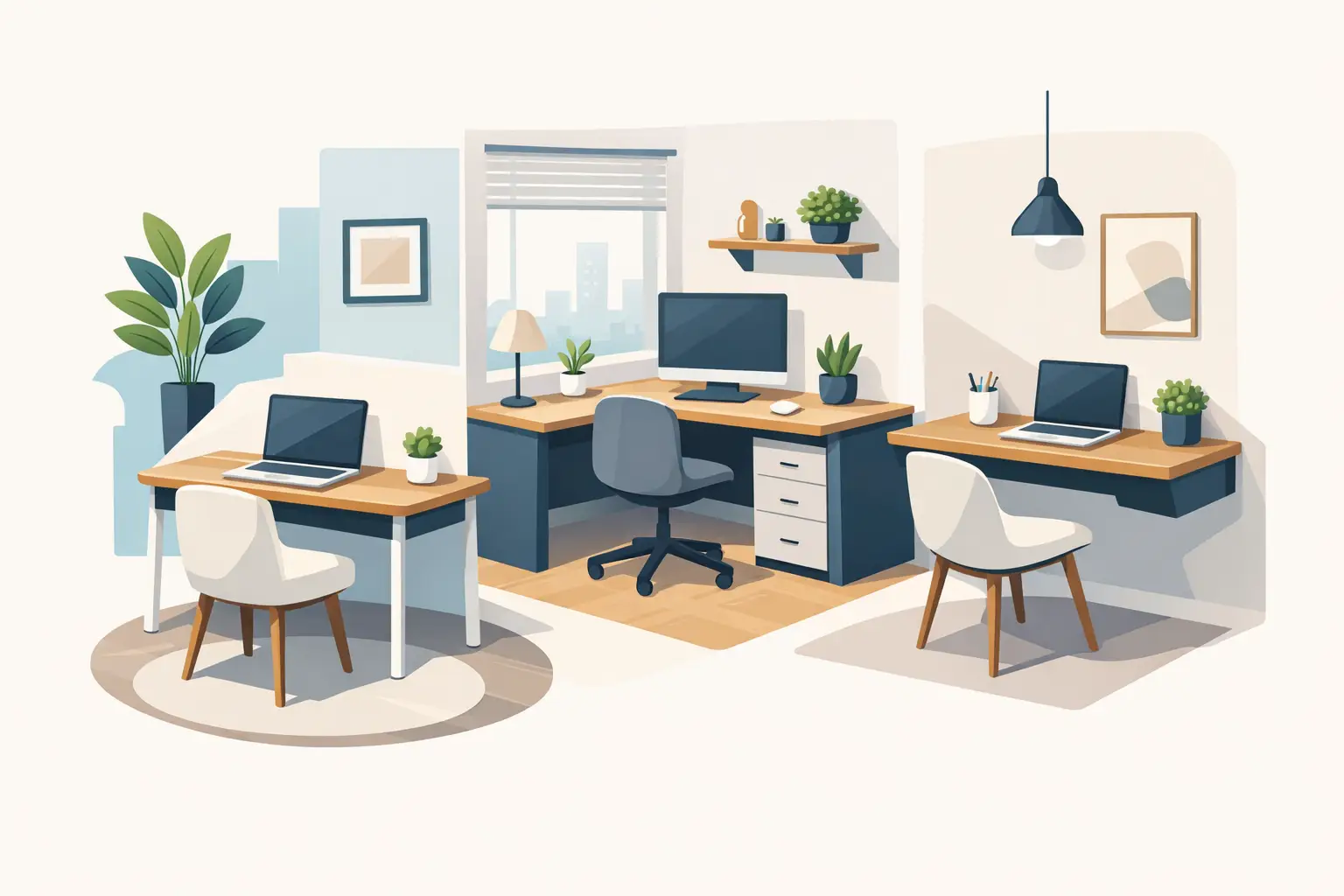
A small office does not need a small standard of work. The best office desks for small spaces make room for focused work, comfortable posture, technology, and daily storage without turning a compact room into a difficult place to move through. The right choice is rarely the desk with the smallest dimensions. It is the desk that fits the work being done, the available floor plan, and the people using it.
For a home office, a growing business, a medical practice administration area, or a compact corporate workspace, desk selection should be part of a broader layout decision. A desk that looks efficient on a product page can create clearance problems, poor cable access, limited legroom, or an awkward visitor path once it is installed. Planning the footprint first avoids those costly compromises.
Start With the Working Footprint, Not the Desk Catalog
Before choosing a desk style, measure the full usable zone. This includes wall length and depth, but also door swings, windows, power points, walkways, filing access, and the space required to pull out a chair. A desk can physically fit against a wall and still make the room feel cramped if the chair blocks circulation every time someone stands up.
As a practical guide, allow enough depth for the monitor, keyboard, and a comfortable forearm position. A shallow desk may suit laptop-only work, but it becomes restrictive when a full monitor, docking station, paperwork, or dual-screen setup is added. For most office tasks, a desk depth of around 24 to 30 inches provides a more workable surface. Smaller depths can be effective when the work is light and storage is handled elsewhere.
Desk width depends on the role. A 40- to 48-inch-wide desk can support one person using a laptop and monitor. Roles involving drawings, physical files, multiple screens, or frequent client meetings typically require more surface area. In a compact office, that does not automatically mean using a larger straight desk. It may mean changing the configuration.
Ceiling height matters too, particularly where overhead storage, screens, acoustic panels, or joinery are planned. Small rooms benefit from using vertical space thoughtfully, but heavy cabinetry above a desk can make the workstation feel enclosed. The goal is usable capacity without visual pressure.
Best Office Desks for Small Spaces by Layout
There is no single best desk shape for every compact room. The most effective option depends on whether the priority is individual concentration, shared use, privacy, storage, or a clean presentation for clients.
Wall-Facing Straight Desks
A straight desk is often the most efficient option for narrow rooms, especially when it sits against a long wall. It creates a predictable work zone, keeps the center of the room clear, and can be fitted with under-desk cable management and modesty panels for a tidy finish.
This format works well for focused administrative work, reception back-office areas, and home offices where the desk must share space with other functions. A straight desk can also be custom-sized to stop short of a window reveal, built-in cabinet, or doorway. That level of adjustment matters in rooms where even a few extra inches can affect circulation.
The trade-off is limited return space. If the user regularly reviews documents beside a keyboard, operates two or three monitors, or needs a dedicated printer area, a straight desk may need support from adjacent storage or a mobile pedestal.
Corner and L-Shaped Desks
An L-shaped desk makes strong use of an underused corner. It separates computer work from writing, document handling, or visitor-facing tasks without increasing the desk’s projection into the room as much as a large rectangular workstation would.
For managers, practice operators, and home-based professionals, this can be an effective way to gain a second work surface. One side can hold screens and technology while the return accommodates files, a printer, or consultation materials. It is particularly useful when a room has one clear corner but limited uninterrupted wall length.
However, corner desks need careful specification. An oversized return can block access to drawers or make the inner corner hard to use. A well-designed L-shaped desk should place the most frequently used items within easy reach and preserve sufficient chair movement on both sides.
Compact Sit-Stand Desks
Height-adjustable desks can be a practical choice in a small space when one workstation needs to support different users or long periods of screen work. They allow the user to change posture without adding a separate standing work area. For hybrid offices, where people may not have permanently assigned desks, adjustability can improve comfort and flexibility.
The key consideration is the desk’s base. Some sit-stand frames have broad feet or crossbars that interfere with pedestals, visitor chairs, and foot placement. The desktop must also remain stable at working height, particularly with larger monitors. A compact sit-stand desk should be specified as a complete ergonomic setup, not simply selected for its ability to move.
Shared Bench Desks
When two or more people must work in a tight area, a benching system can be more space-efficient than several separate desks. Shared legs and a continuous top reduce visual clutter, while integrated power and cable trays prevent the room from becoming tangled with cords and adapters.
Bench desks are best suited to collaborative teams that do not require high levels of visual or acoustic privacy. Add desk-mounted screens or modesty panels when concentration, confidentiality, or clean sightlines are important. In a small office, these accessories should be proportioned carefully so they provide separation without making every seat feel boxed in.
Ergonomics Cannot Be Treated as Extra
A compact desk is only successful if it supports healthy, sustainable work. The desktop height, chair adjustment range, monitor position, and leg clearance all need to work together. A person should be able to sit close enough to the desk to use a keyboard without reaching forward, while keeping the screen at a comfortable viewing distance.
Avoid solving a space problem by placing storage directly under the central knee zone. Fixed drawers, CPU holders, and low crossbars can limit posture changes and make a desk uncomfortable for taller users. If storage is necessary, position it to one side or use a mobile pedestal that can be moved when access is needed.
Monitor arms are especially valuable in compact offices. They free up desktop space, allow screens to be positioned more accurately, and make it easier to adjust the workstation when staff change. They also make cleaning and cable management simpler, which helps a small office continue to look organized after installation day.
Build Storage Into the Plan
Desks fail in small spaces when they become the default storage area. Paper stacks, chargers, stationery, personal items, and equipment quickly consume the surface needed for actual work. The answer is not always more desk drawers. Often, a combination of nearby low storage, wall-mounted shelving, lockable pedestals, and concealed cable management works better.
For client-facing offices, integrated storage also protects presentation. A clean workstation reinforces confidence when visitors can see into an office, reception area, or meeting room. In medical and professional environments, lockable storage may also be necessary for privacy and document control.
Custom cabinetry can be particularly effective where standard furniture leaves unusable gaps. A shallow cabinet beside a desk, a printer shelf built into a joinery run, or overhead storage designed around an existing window can add capacity without consuming valuable circulation space. This is where a measured plan is more valuable than buying separate pieces and hoping they align.
When a Custom Desk Is the Better Investment
Standard desks are appropriate when dimensions, finishes, and functionality already suit the space. But unusual rooms often call for a tailored solution. Columns, angled walls, restricted access, integrated technology, accessibility needs, and branded reception requirements can all make off-the-shelf furniture inefficient.
A custom desk can be manufactured to the exact width, depth, height, and configuration required. It can incorporate cable ports, power access, privacy screens, drawers, equipment bays, and matching cabinetry from the outset. For businesses planning a refurbishment or relocating to a new premises, coordinating desks with the complete fit-out also reduces the risk of late-stage clashes between furniture, electrical work, flooring, and partitioning.
Absolute Office Comforts approaches compact workspace planning as a combined furniture and layout exercise. That means desk design can be coordinated with storage, ergonomics, installation access, and the operational needs of the people who will use the room each day.
The best small-space desk is the one that leaves people enough room to work well, move easily, and keep the area under control. When every inch has a purpose, a compact office can feel deliberate rather than limited.