



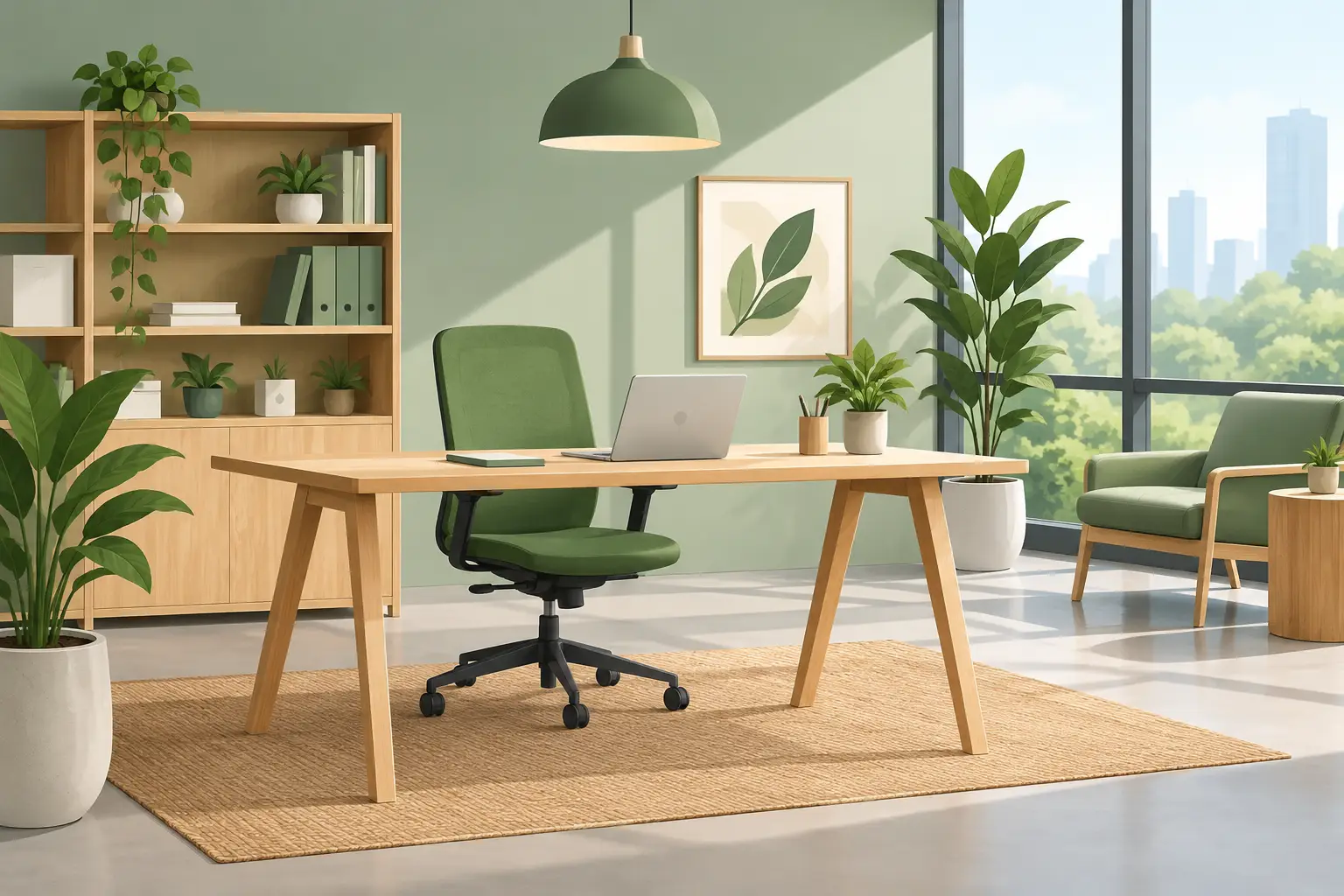
A workstation that needs replacing after three years is not a sustainable choice, even if it arrived in recycled packaging. The most valuable sustainable office furniture trends focus on what happens over the full life of a workplace: how furniture is made, how long it performs, whether it can be reconfigured, and where its materials go when the layout changes.
For business owners, facilities teams, and developers, this is not simply a purchasing preference. It is a practical way to reduce replacement cycles, support employee comfort, and create an office that can respond to growth without starting from scratch. The right approach combines durable materials, thoughtful specification, ergonomic performance, and a fit-out plan built around the way people actually work.
Sustainable Office Furniture Trends: Built for a Longer Service Life
The strongest shift in sustainable workplace design is away from disposable furniture and toward products designed for repair, adjustment, and reuse. A lower upfront price can be attractive during a relocation or refurbishment, but frequent replacement often costs more once delivery, downtime, disposal, and disruption are considered.
Commercial-grade desks, workstations, storage, and seating should be assessed for their usable life, not only their purchase price. Look at the quality of frames, mechanisms, edging, finishes, and fixings. Can a damaged desktop be replaced without discarding the entire workstation? Can a chair’s arms, upholstery, casters, or gas lift be serviced? These details determine whether an item remains useful after daily commercial use.
Locally manufactured furniture can also support this longer-life model. It can be made to the dimensions, finishes, and cable-management requirements of the project rather than forced into a standard footprint. If future changes are needed, access to the original manufacturer makes replacement components, matching joinery, and modifications more achievable.
Modular workstations reduce waste during change
Workplace requirements rarely remain fixed. A business may add staff, create focus rooms, reduce assigned desks, or convert an open area into client-facing space. Fixed furniture that only works in one configuration can quickly become redundant.
Modular workstation systems are gaining traction because they allow desks, screens, storage, and power access to be reconfigured rather than removed. A well-planned system can move from linear benching to team pods, accommodate new technology, or be resized as departments change. The sustainability benefit comes from retaining useful components while only manufacturing or purchasing what the revised layout requires.
Modularity is not automatically the right answer for every office. A small executive suite, boardroom, medical consulting room, or reception area may benefit more from custom-built joinery designed for a specific operational purpose. The key is to specify each element with its expected use, maintenance needs, and likely future changes in mind.
Material Choices Are Becoming More Transparent
Material selection has moved beyond choosing a finish that looks environmentally friendly. Decision-makers increasingly want to know what a product contains, how it was manufactured, and whether it contributes to a healthier indoor environment.
Timber-based products remain popular for desks, cabinetry, meeting tables, and reception counters, particularly when they are responsibly sourced and specified with durable, low-emission finishes. Recycled metal content in workstation frames and storage can reduce demand for virgin materials, while recycled fabrics and recyclable textiles offer more considered upholstery options for task seating and soft seating.
Low-VOC adhesives, coatings, and boards are another important consideration. Office interiors contain many surfaces within a relatively enclosed environment. Selecting lower-emission materials can help support better indoor air quality, particularly in workplaces, medical practices, and shared spaces where people spend long hours indoors.
There are trade-offs. Some recycled surfaces may have limited color consistency or a narrower range of finish options. Natural materials need appropriate sealing and maintenance, especially in kitchens, breakout spaces, and high-touch reception areas. A sustainable specification must still meet cleaning, durability, fire, acoustic, and visual requirements. The best material is one that performs reliably in its intended setting rather than one that simply makes the strongest environmental claim.
Refurbishment Is Replacing the Full Strip-Out Mindset
A complete office strip-out can be necessary when services, compliance, layout, or building condition demand it. But it should not be the default response to an outdated workplace. One of the most commercially sensible trends is targeted refurbishment: retain what works, upgrade what does not, and redesign the space around current needs.
Existing workstations may be refreshed with new tops, screens, power modules, or task chairs. Quality storage can be retained and refinished. Meeting rooms can receive updated tables, acoustic treatments, and integrated technology without rebuilding every wall. In a reception space, a new counter front, durable transaction top, and updated signage zone can change the client experience while preserving the underlying structure.
This approach requires accurate site assessment. Before committing to new furniture, review the condition, dimensions, safety, and adaptability of existing assets. It is also worth identifying furniture that can be repurposed elsewhere in the organization. A surplus credenza may become back-of-house storage; meeting chairs may suit a training room; workstation components may support a smaller satellite office.
A fit-out partner that manages planning, manufacturing, trades, and installation can make refurbishment more practical. Decisions about retained furniture affect flooring, electrical work, partitions, access routes, and installation timing. Coordinating these elements early prevents a sustainable intention from becoming an expensive on-site compromise.
Ergonomics Is Part of the Sustainability Equation
Furniture that supports people properly is more likely to remain in use. That is why ergonomic performance belongs in any discussion of sustainable office furniture trends.
Height-adjustable desks, adjustable task chairs, monitor arms, and well-designed keyboard positions can help create workstations that suit a broader range of employees. This reduces the pressure to replace furniture whenever a new team member has different physical requirements. It also gives organizations a practical way to improve comfort without continually adding one-off equipment.
Ergonomics should be addressed through the entire workstation, not through a chair alone. Desk height, screen placement, leg clearance, task lighting, cable management, and access to storage all affect how effectively a person can work. In medical and specialist settings, furniture also needs to support privacy, infection-control practices, equipment access, and efficient staff movement.
Not every team needs the same solution. A hot-desking environment may need highly adjustable settings and simple user controls. A design studio may need larger shared work surfaces and pin-up areas. A reception team may prioritize durable surfaces, secure storage, and a layout that supports consistent client interaction. Sustainable planning begins with the work being done in the space.
Circular Planning Starts Before Furniture Is Ordered
Circularity is often discussed as an end-of-life issue, but the most effective decisions are made at the specification stage. Avoiding unnecessary complexity, selecting serviceable products, and documenting finishes and components all make future repair or reconfiguration easier.
For larger fit-outs, keep a record of furniture models, upholstery selections, desktop finishes, hardware, and key dimensions. This gives facilities teams a clear reference when ordering additions or repairs years later. It also helps maintain a consistent appearance as the workplace grows.
Consider how furniture will enter, move through, and leave the building. Oversized custom pieces can create access issues in lifts, stairwells, or leased premises with limited loading areas. In some projects, a sectional meeting table or modular reception unit provides the same finished result while making installation and future relocation far more manageable.
Procurement timing matters as well. Selecting locally manufactured or made-to-order furniture may involve lead times, but it provides greater control over quality, customization, and project coordination. Planning early gives the project team time to align furniture production with site works and avoid rushed substitutions that may undermine the original brief.
What to Ask Before Approving a Sustainable Fit-Out
A sustainability claim should hold up under practical questions. Ask how long the product is expected to perform in commercial use, what can be repaired or replaced, which materials and finishes are used, and whether the furniture can be adapted to a revised layout. Confirm cleaning requirements, warranty coverage, and whether replacement parts can be supplied.
It is equally useful to ask what can be retained from the current workplace. Sometimes the most responsible and cost-effective decision is not a new product. It is a careful refurbishment supported by new ergonomic seating, improved power access, and custom elements where they add real operational value.
At Absolute Office Comforts, sustainable outcomes are approached through durable local manufacturing, tailored furniture design, and fit-out planning that considers the full project rather than a single purchase order. The objective is not to fill a space with short-lived trends. It is to create a workplace that performs well now and remains adaptable when the business changes.
When planning your next office update, start with a clear question: what should this furniture still be able to do five years from now? The answer will lead to better specifications, less waste, and a workplace investment that continues to earn its place.